Overview
Each person in the court plays a different role. You might not know who some of them are or why they are there. This page explains who you may come across in court, what they do and how they might interact with you.
The Courtroom
-
Court Room Set Up
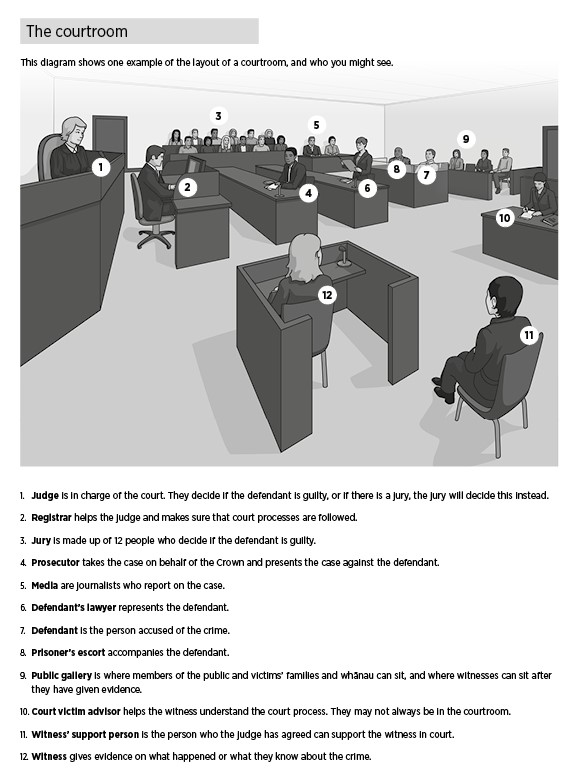
Below, you'll find a picture showing an example of the people you might see and descriptions of these people in the court room.
The Judge
The judge has the important role of guiding the entire trial, making sure the process is fair and the law is followed.
The Court Registrar and Court Attendant
These two roles support the trial, help it run smoothly and ensure everything that happens in court is well documented.
Police Officer in Charge
The police officer in charge will help and support you leading up to and during the court process. They’ll work with the prosecutor to prepare the case for trial. Part of their role is to keep you informed about the case, explain the court process, and answer any questions you may have.
The Jury
The jury is made up of 12 people from the community. Their role is to listen to all evidence presented by the police prosecuting lawyers and the defendant’s lawyers and make a decision on whether the defendant is guilty or not guilty.
The Prosecuting Lawyer
The prosecuting lawyer presents the case against the defendant. They must act fairly but will seek to prove that the defendant has committed the crime. They'll present evidence to the jury by calling witnesses and may also produce photos, videos and other evidence to support the case. If you’re a witness, they'll ask you questions about what happened and may also call other witnesses.
They aren't your lawyer and the information they present in court is based on the case prepared by police. If you think legal assistance would be relevant to you, you can choose to talk to a lawyer.
Read more about legal assistance:
The Defence Lawyer
The defence lawyer represents the defendant. They're defending them against the charges, and they’re likely to ask you questions and call witnesses to help them do that.
The Defendant
The defendant will be in the court room when you give your evidence and will be able to see and hear you; even if you're behind a screen or giving evidence through a TV.
Your Court Support Person
You can have someone in the courtroom with you to provide support while you give your evidence. They're not able to help you answer the questions but can offer you silent support. If there is someone you would like to have as your support person, you can talk to the police officer in charge of your case before going to court.